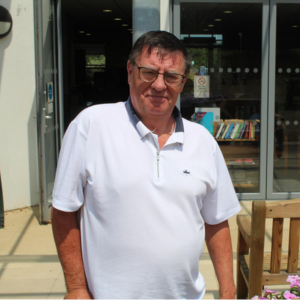

Exercise has become a vital part of his routine. For the past four years, Mark has taken part in classes at the Centre, including Balance Warrior on Mondays where he sees real improvement in his stability and enjoys the “penguin waddle” exercise. He also does HIIT (high intensity interval training) classes with Vanessa on Fridays.
Mark Barleycorn was just 26 when he experienced the first signs of something being wrong. While away for the weekend with his wife, he struggled to walk up a bank – an unusual difficulty that led him to visit the doctor upon returning home. There, electrodes were attached to his head, and he received the diagnosis of Multiple Sclerosis. His early symptoms included numbness on his left side and problems walking. Diagnosed with Relapsing and Remitting MS, his symptoms initially eased within a month or two, allowing him to return to a sense of normality.
At 30, after finally undergoing an MRI scan, the diagnosis was confirmed. The scan revealed the lesions affecting his body. Steroids helped manage the symptoms during flare-ups, but over time those episodes began lasting longer.
He has been taking 8000mg a day of evening primrose oil for the last 30 years and credits it with helping his mood and symptoms.
As he moved into his 40s, Mark found himself struggling with depression, something he later realised was connected to how he had shelved the diagnosis and not dealt with it emotionally. He began talking therapy, which helped. Still, outside of his close family, he didn’t speak openly about his MS. He once visited the Centre when it was still just a shed over the road but he couldn’t bring himself to go inside and instead drove away. 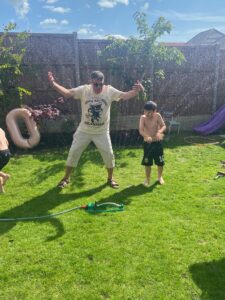
Despite the condition, Mark remained active in his working life, finding roles that allowed for flexibility and understanding. Over the years, he has worked as a funeral director, with the NHS, and as a salesman – always making sure the job fit around his MS.
A lover of sports, he was encouraged to try walking football after he retired but found it too physically demanding due to the quick turns, even when playing in goal. Instead, he found peace in gardening, which became a new source of joy.
Mark remained mobile into his 50s, using a stick to aid with walking. At this stage, he finally began coming to terms with his diagnosis.
His wife had grown tired of him breaking crockery and glasses due to the lack of sensation in his left side! Now living with Secondary Progressive MS, that side is still usable but numb, and he lacks dexterity, forcing him to adapt to new ways of doing everyday tasks like buttoning clothes.
Mark has also faced challenges with the benefits system. Initially awarded medium banding for PIP, he was denied it four years later, ironically, because he had driven himself to the assessment and got out of his car unaided. Thankfully, he has since regained access to it and continues to value the independence that driving gives him.
After retiring in 2017, Mark felt it was time to revisit the Centre, this time at the recommendation of his NHS Physio.
“Once I walked in
the doors, I was greeted by the friendly crew at Reception and instantly felt at home here.”
He now regularly attends the Centre, using oxygen therapy every three weeks. It helps regulate his sleep, something he can feel deteriorating when he’s due for another session.
Exercise has become a vital part of his routine. For the past four years, Mark has taken part in classes at the Centre, including Balance Warrior on Mondays where he sees real improvement in his stability and enjoys the “penguin waddle” exercise. He also does HIIT (high intensity interval training) classes with Vanessa on Fridays.
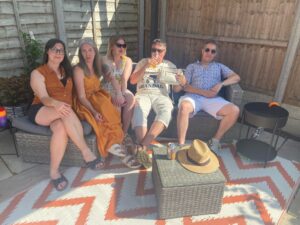
Family has always been central to Mark’s journey. When he had his first MS attack, he had four children, two stepchildren aged twelve and nine and his two daughters were just four and six years old. Unsure how to explain the diagnosis, he and his wife found a children’s book about MS, leaving it around the house. Gradually, the girls asked questions and learned about their father’s condition.
Now a grandfather, Mark’s grandchildren are also beginning to understand MS and the limitations it brings such as not being able to play football with them for long periods. Still, they motivate him to stay active and mobile.
“I count myself as very lucky and have never let my MS hold me back.Some days you have to rest and some days you don’t. You need to know your limits and adapt.”
You can find out more about our gym classes and physical therapies on our website.