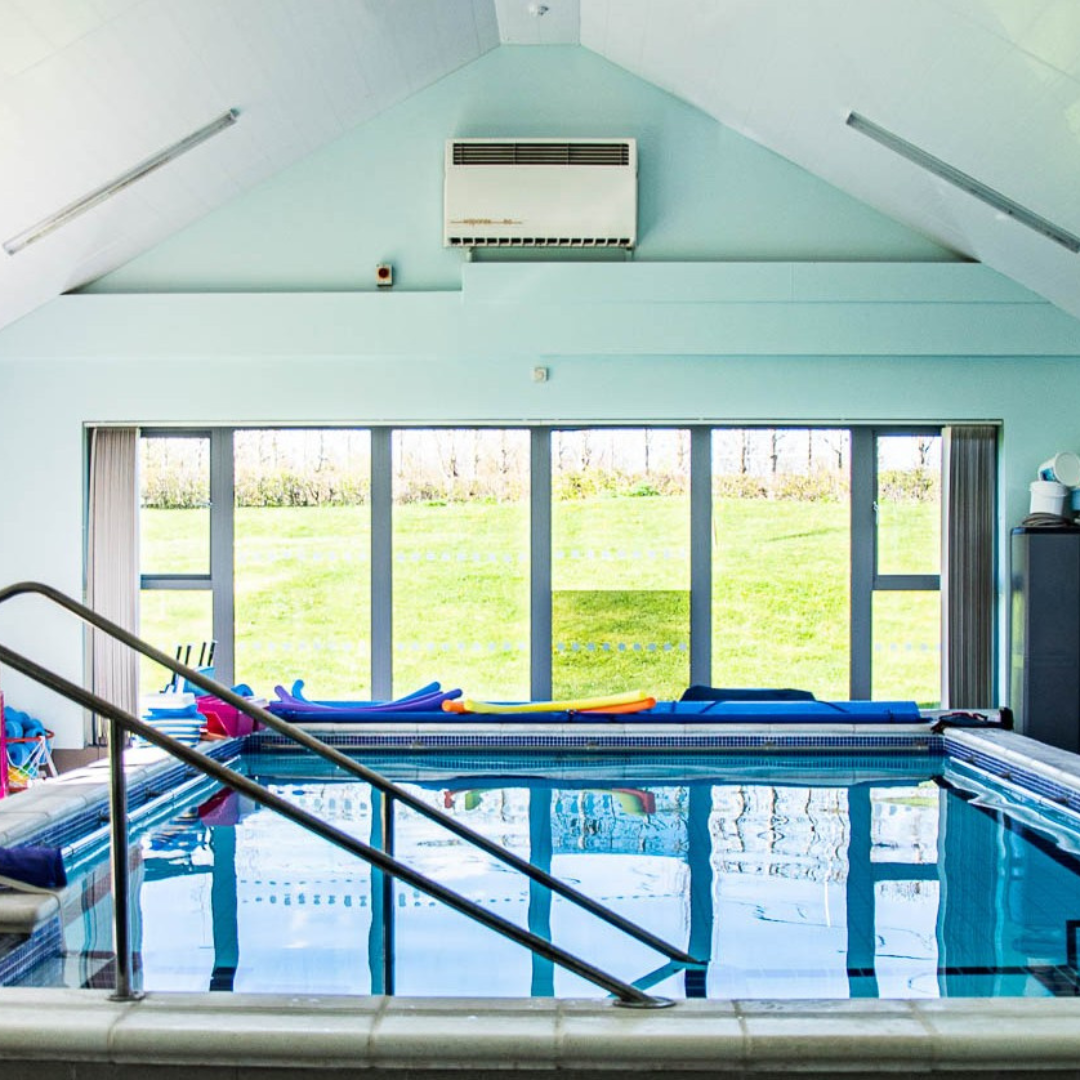

The Kent Neuro Therapy Centre’s hydrotherapy team is brilliant – consistently kind and encouraging, with many years of experience. In my initial assessment session, they put together a programme of exercises that were tailored to my needs; this has been adjusted as I’ve grown stronger.
It is a bright summer morning. I walk around our garden, enjoying the sight and scents of flowers, admiring the fruit and veg patch growing its delicious produce. My legs hurt and are unsteady, so my progress is slow, but the fact that I’m still walking at all is a minor miracle.
 Peter’s Garden
I’ve lost count of the number of medical staff who have told me how important it is to keep as mobile as possible, because our bodies aren’t made to be sedentary. But with a progressive condition where overdoing exercise can leave one worse off, this is difficult. What works for me is a weekly session of hydrotherapy, where it is easy to adjust the exercises according to how I’m feeling.
For those who haven’t tried hydrotherapy, it is essentially physiotherapy in a warm-water pool. I cannot swim, or even float safely, but that doesn’t matter because one’s whole body is supported by floats for exercises that are done lying down. Exercising in a hydrotherapy pool is generally easier than exercising on land, for several reasons. First, the warm caress of the water relaxes stiff muscles and reduces pain. Water resists movement more than air does, so exercises become slower and more flowing, reducing the stress on tender joints. Standing in the pool, the water supports roughly half one’s weight, which is a great help with exercises such as step-ups.
 Peter
PeterCommonly, people starting hydrotherapy are surprised at how much they can do in the pool that they cannot normally do. What has surprised me more is how much improvement I’ve seen since I started hydrotherapy. I’d been going through the most severe and prolonged flare-up since my initial diagnosis. It looked likely that I would soon need a wheelchair, so my aim was to maintain as much mobility as possible. I’ve been delighted to find that, overall, I’m able to do more and more as time passes.
 Pool at KMSTC
My capacity for the more demanding exercises varies from week to week, so it’s been essential to listen to my body and adjust what I do accordingly. Muscles that are being strengthened normally ache for up to a day after exercise; this is not a bad sign. However, if I continue to get exerciserelated pain for more than a day, I’ll reduce what I do in the next session. Equally, if I’m finding an exercise too easy, I’ll ask the hydrotherapy staff member who is with me for some advice on a suitable replacement; it is necessary to push oneself a bit.
The Kent MS Therapy Centre’s hydrotherapy team is brilliant – consistently kind and encouraging, with many years of experience. In my initial assessment session, they put together a programme of exercises that were tailored to my needs; this has been adjusted as I’ve grown stronger. As you will have gathered, I recommend hydrotherapy most strongly. It has surpassed other treatments in keeping me as healthy as I can be – well enough to walk among the flowers!
By Peter Hydon